
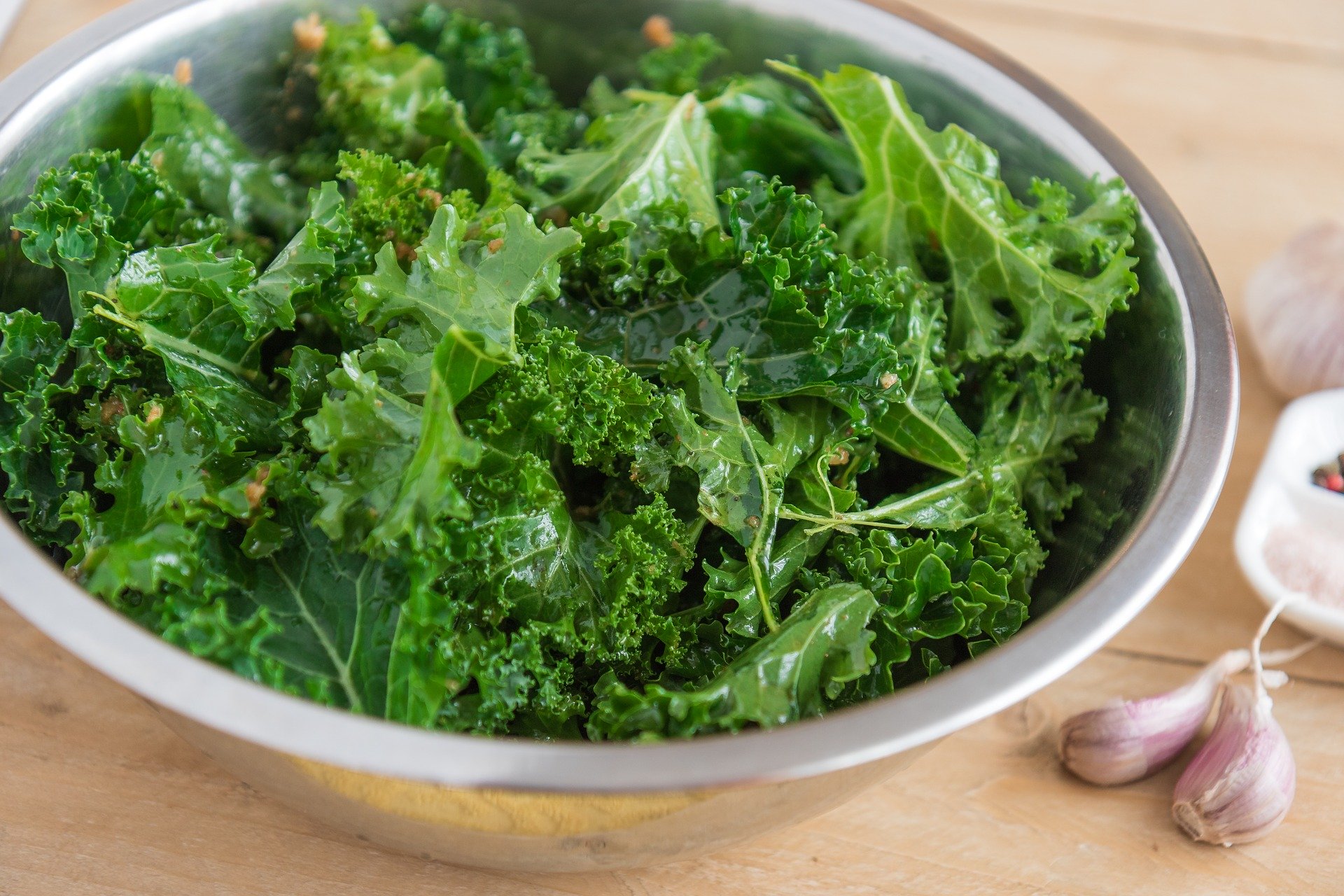
Kale is a green, leafy, cruciferous vegetable and a member of the mustard family, as are cabbage and Brussels sprouts.
There are many different types of kale, and the leaves can have either a smooth or curly shape.
Kale contains fiber, antioxidants, calcium, vitamins C and K, iron, and a wide range of other nutrients that can help prevent various health problems.
Reasons to Eat Kale
1. Packed with Nutrients
Kale is very high in nutrients and very low in calories making it one of the most nutrient-dense foods on the planet. A single cup of raw kale contains:
- 33 calories
- 3 grams protein
- 6 grams of carbohydrates
- 2 grams of fiber
- 206% of DV vitamin A (in the form of beta-carotene)
- 684% of DV vitamin K
- 134% of DV vitamin C
- 26% of DV of manganese
- 9% of DV of calcium
2. Loaded with Powerful Antioxidants
Kale is very high in antioxidants like vitamin C and beta-carotene, as well as various flavonoids and polyphenols. Antioxidants fight oxidative damage in the body. Oxidative damage is believed to be a leading driver of aging and many diseases.
Some substances that act as antioxidants have other important functions. Kaempferol and quercetin, both found in large quantities in kale, are two such substances that have been found to have heart-protective, blood pressure-lowering, anti-inflammatory, anti-viral, anti-cancer, and anti-depressant effects.
3. Boosts Immunity
Kale is extremely high in vitamin C. A single cup of raw kale has more vitamin C than a whole orange. Vitamin C plays a role in boosting our immune system. It also necessary for the synthesis of collagen (the most abundant structural protein in the body).
4. Lowers Heart Disease Risk
Kale contains substances that lower cholesterol levels in the body. This might reduce heart disease risk over time. These substances are called bile acid sequestrants.
One study found that drinking kale juice everyday for 12 weeks increased HDL (good) cholesterol by 27% and lowered LDL (bad) cholesterol by 10%.
Kale also contains quite a bit of potassium. Adequate potassium intake has been linked to reduced blood pressure and a lower risk of heart disease.
5. Lowers Cancer Risk
Kale is loaded with compounds that are believed to protect against cancer. One of these is sulforaphane, a substance that has been shown to fight the formation of cancer at the molecular level.
Kale also contains indole-3-carbinol, another substance that is believed to help prevent cancer.
6. Boosts Eye Health
Two nutrients that prevent eyesight from getting worse as we age are lutein and zeaxanthin, and they are found in large amounts in Kale.
Ways to Enjoy Kale
- Smoothies: Add a handful of kale to any favorite smoothie. It will add nutrients without changing the flavor very much.
- Salads: Use raw kale leaves as a main ingredient in a delicious vegetable salad.
- Sandwiches: Add raw kale leaves to a sandwich, wrap, or flatbread.
- Kale Chips: Remove the ribs from kale and toss with olive oil. Bake at 275 degrees to desired crispness.
 The Mediterranean Diet Unplugged