
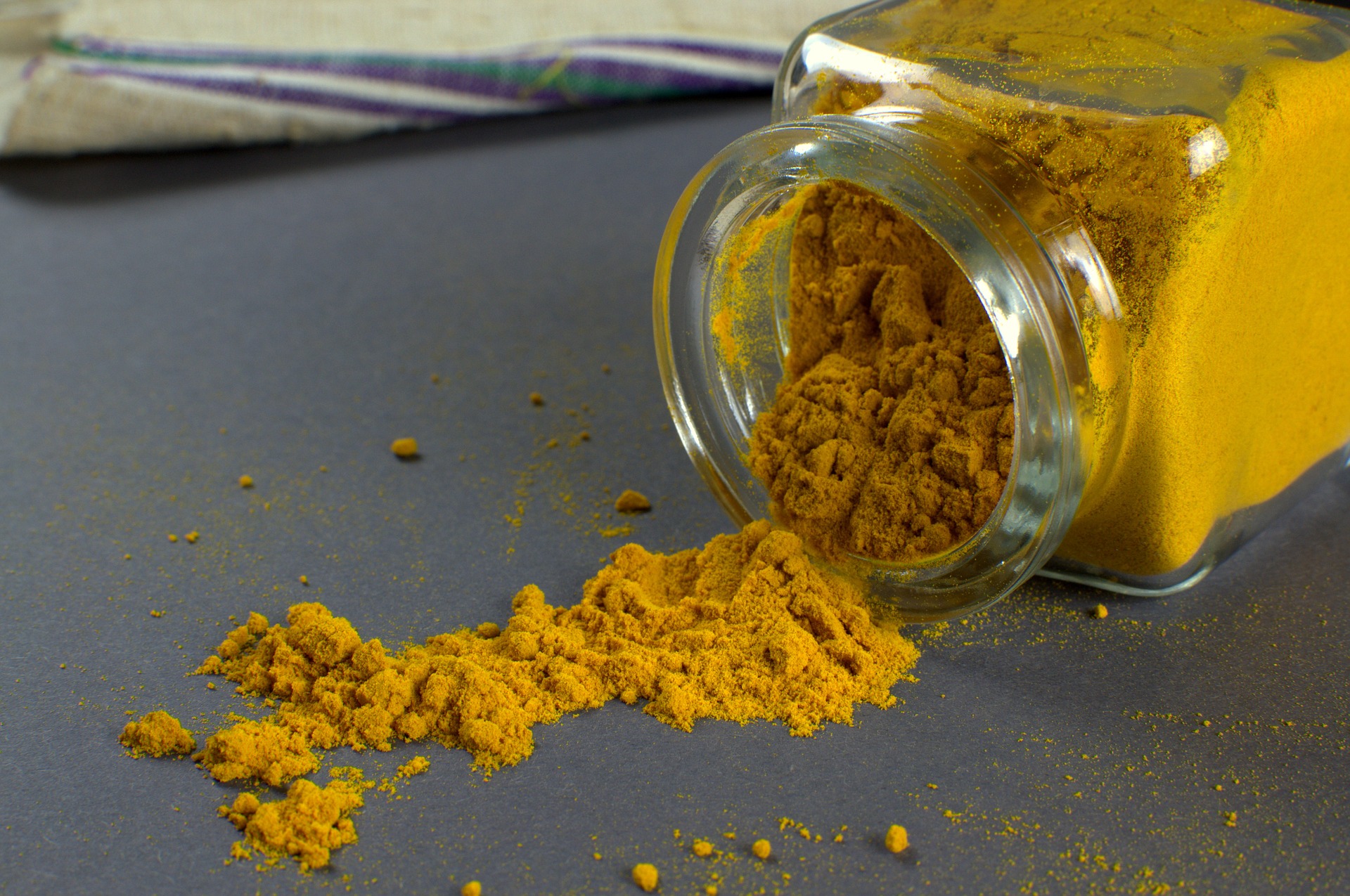
Turmeric is the spice that gives curry its golden yellow color. It is a root of a flowering plant that is cultivated mostly in India and Southeast Asia. It is a member of the ginger family. Research has shown that spices, like turmeric and ginger, fight chronic inflammation, which is is associated with many health problems ranging from obesity to cardiovascular disease and cancer.
Most scientific studies used turmeric extracts (in the form of supplements). The University of Maryland Medical Center advises you not to take turmeric supplements without approval from your physician. Ingesting small amounts of turmeric in food is considered safe, however. To enjoy turmeric’s health benefits without the risk of consuming it in toxic amounts, try adding it your daily diet.
Turmeric does not absorb well into the bloodstream. However, there is a compound in black pepper called piperine that increases its absorption into the bloodstream. Therefore you may be able to reap benefits from turmeric if you also add black pepper. Turmeric is also fat-soluble, so consuming it with a healthy fat, like extra-virgin olive oil, increases its absorption into the bloodstream.
Ways to Enjoy Turmeric
- Smoothies: Blend it in a smoothie. The slightly pungent flavor is well masked in smoothies. Fresh turmeric root works well as well as a pinch of the ground spice.
- Scrambled Eggs and Frittatas: Use a pinch in scrambled eggs or a frittata.
- Soups: A bowl of vegetable or chicken soup feels even more warming when it is tinged with golden turmeric.
- Greens: Sprinkle turmeric into sauteed or braised greens like kale, collards, and cabbage.
- Rice: A dash of turmeric brings color and mild flavor to plain rice or a pilaf.
- Roasted Vegetables: Turmeric’s slightly warm and peppery flavor works well with cauliflower, potatoes, and root vegetables.
 The Mediterranean Diet Unplugged