
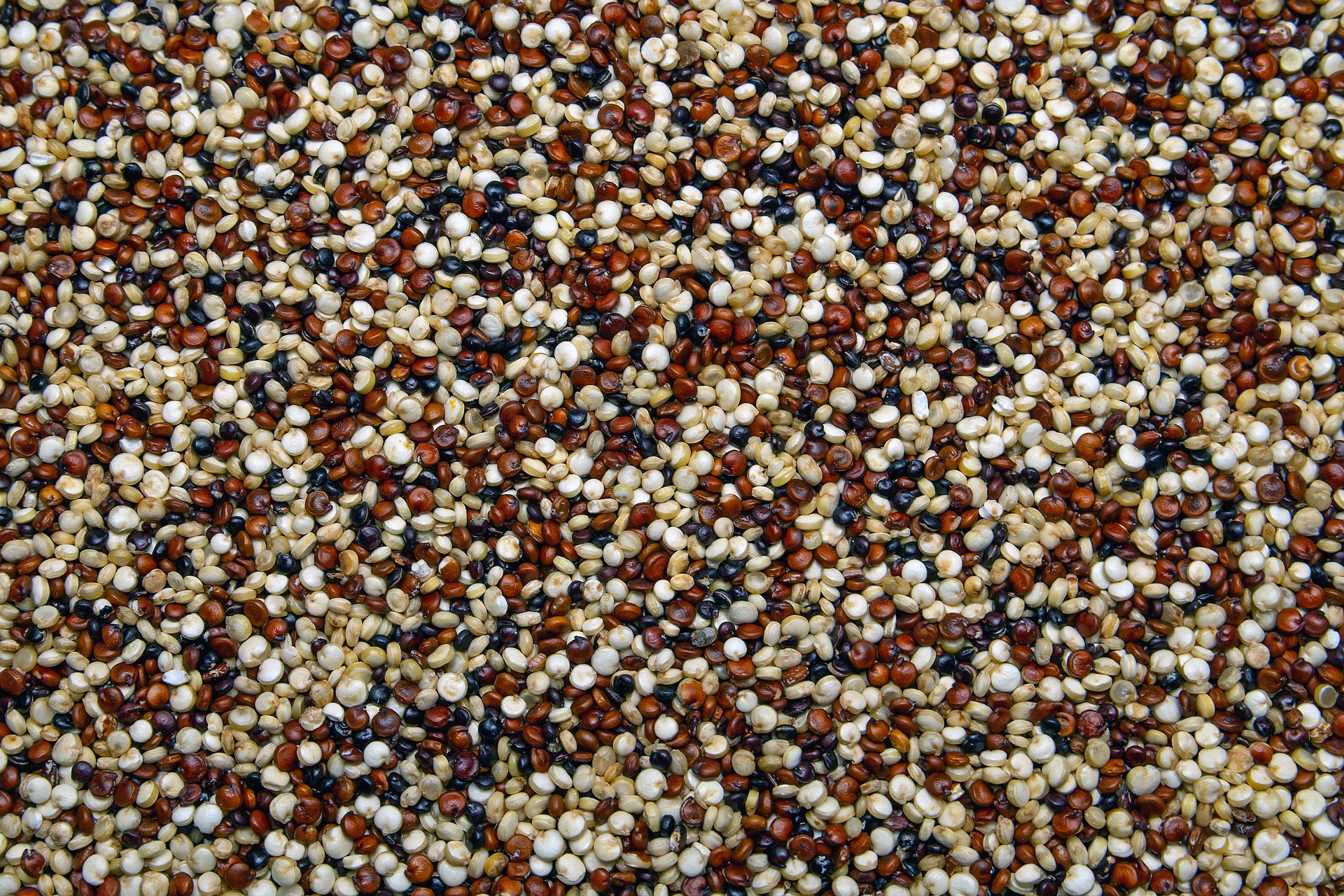
Quinoa is a seed from the Chenopodium quinoa plant, a plant that produces seeds instead of fruit. So technically it is not a grain. Whole grains, like oats and barley, are seeds of grasses, not plants. The technical definition of quinoa is actually a “pseudograin.” However, since quinoa is prepared and eaten as a whole grain, the nutrition world considers it a whole grain.
Quinoa is indigenous to the Andean region of South America, specifically Bolivia, Ecuador, Chile and Peru. It is now grown all around the world, however the majority is grown in Bolivia and Peru. There are about 120 varieties of quinoa, but there are three that are widely available for sale: red, white and black.
- White Quinoa: This is the most widely sold variety and takes the least amount of time to cook. It is also called ivory quinoa.
- Red Quinoa: This does not easily lose its shape; therefore, it is perfect in salads or other recipes where the texture of the distinct grain is preferred.
- Black Quinoa: This has a more distinct taste than the white or red varieties. Its taste profile has been described as earthy and sweet.
Quinoa is high in protein and an important plant source of all nine essential amino acids. Essential amino acids are the amino acids that your body cannot make on its own. These amino acids need to be obtained from your diet. Let’s look at quinoa’s health benefits.
Health Benefits of Quinoa
1. Packed with Nutrients
Quinoa is gluten-free and packed with nutrients like protein, zinc, magnesium, iron, fiber and folate (vitamin B9). One cup (185 grams) of cooked quinoa contains:
- Calories: 222
- Protein: 8 grams
- Fat: 3.6 grams
- Carbohydrates: 39 grams
- Fiber: 5 grams
- Zinc: 2 milligrams (13% DV)
- Iron: 2.8 milligrams (15% DV)
- Magnesium: 118 milligrams (28% DV)
- Folate: 78 micrograms (19% DV)
- Potassium: 318 milligrams (9% DV)
2. Packed with Disease-Fighting Antioxidants
Quinoa also contains disease-fighting plant compounds that act as antioxidants. Two such antioxidants that have been studied extensively are quercetin and kaempferol. They both help protect cells from damage caused by unstable molecules called free radicals.
3. Calms Inflammation
The antioxidants in quinoa also have anti-inflammatory properties. Chronic inflammation is the hallmark of chronic diseases like heart disease, type 2 diabetes and cancer. In scientific studies, quercetin and kaempferol have been shown to protect against heart disease, osteoporosis, and various forms of cancer.
4. Supports Heart Health
Quinoa is a great source of both potassium and magnesium, both of which play a major role in heart health. They both reduce blood pressure to keep your heart healthy and strong. They also have been found to reduce the risk of stroke in observational studies.
5. Supports Digestive Health
Quinoa is high in fiber. Fiber promotes regular bowel movements and feeds the beneficial bacteria in your digestive tract. Quinoa also provides some resistant starch, which also passes through your stomach and small intestine undigested and feeds your friendly gut bacteria. A healthy gut microbiome promotes better overall health.
6. Helps with Weight Loss
Eating a high fiber diet can help support a healthy body weight, since fiber helps promote satiety. Quinoa is also high in protein, and both protein and fiber help you feel full and help keep your portion sizes in check.
7. Fights Cancer
Quercetin has been shown to help stop the spread of certain types of cancer. Quercetin is a powerful antioxidant which also relieves chronic inflammation. Both quercetin and kaempferol have been shown to protect against various forms of cancer in scientific studies.
Ways to Enjoy Quinoa
- Vegetable Salads: Pair quinoa with black beans and cilantro for a savory salad.
- Green Salads: Toss into a spinach or kale salad.
- Breakfast Porridge: Pair quinoa with fruit, nuts and seeds for a delicious breakfast porridge.
- Pilafs: Use quinoa in place of rice as a pilaf with spices of your choice.
- Stews/Soups: Add quinoa to your favorite stews or soups.
- Side Dish: Season and serve as a side dish.
- Stuffed Peppers: Mix with veggies and stuff into bell peppers.
 The Mediterranean Diet Unplugged