
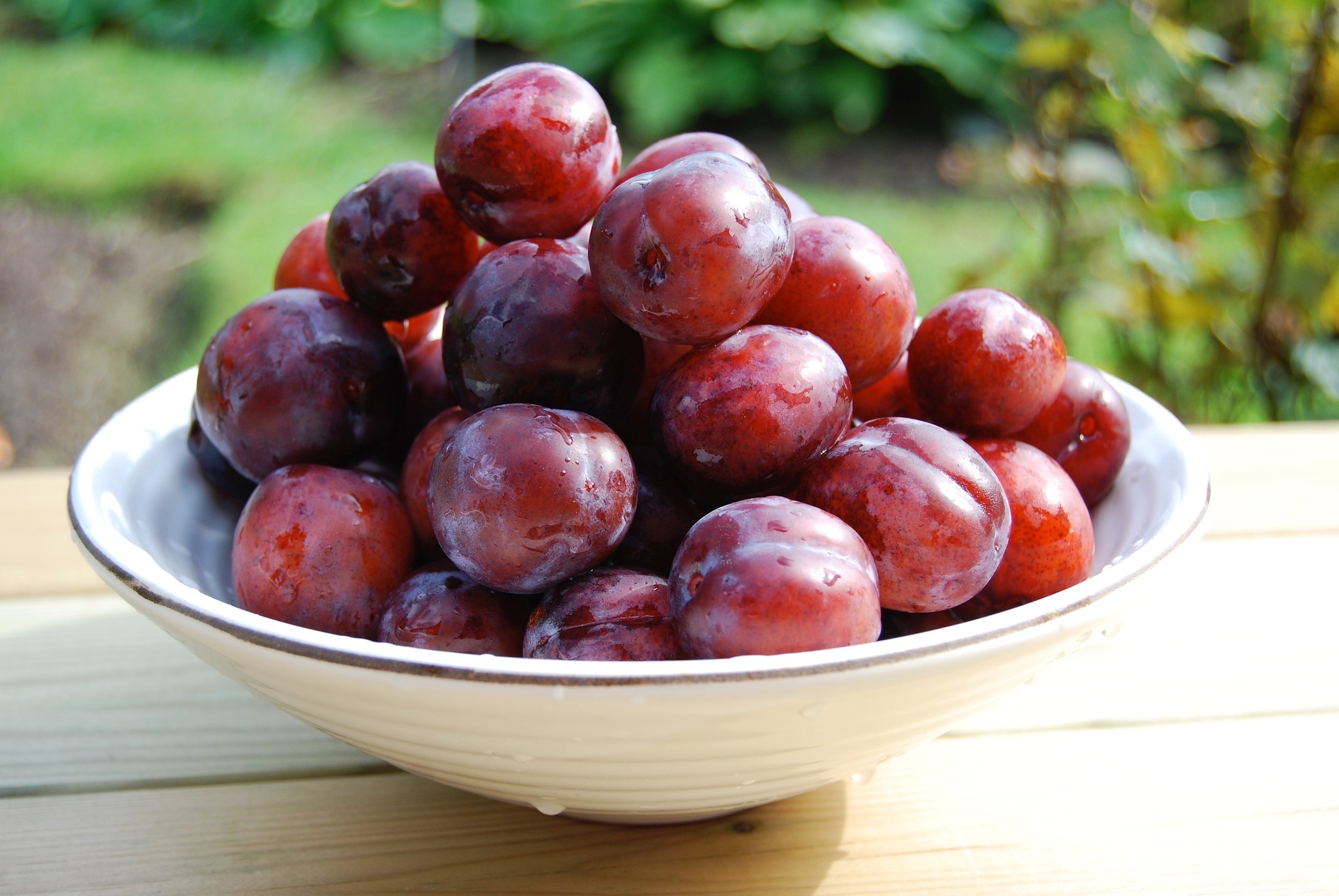
Plums are medium-size stone fruits. They come in a variety of colors, but in the US, you’ll most often find red or purple plums. Purple plums tend to be sweeter, while red plums have a sweet-tart flavor. All varieties have a stone in the center of the fruit which is not edible.
Plums can be eaten raw as a sweet tasting snack. In the kitchen, they are most often used in baked goods or boiled to create jams and sauces for both sweet and savory dishes.
Nutritional Benefits
Plums are packed with vitamins, minerals, and fiber. Here is the nutritional information for one medium-size plum.
- Calories: 30
- Carbohydrates: 7.5 g
- Sugar: 6.6 g
- Fiber: 0.9 g
- Protein: 0.5 g
- Fat: 0.2 g
- Potassium: 104 mg
- Magnesium: 4.6 mg
- Vitamin C: 6.3 mg
Health Benefits
1. Provide Antioxidants
Plums are rich in antioxidants, which help protect your cells from damage by free radicals. They are particularly high in polyphenol antioxidants, which may help reduce the risk of heart disease and diabetes.
Anthocyanins, a particular polyphenol, appears to be the most active polyphenol in plums. They are the compounds responsible for the plum’s dark-colored skin. They have powerful health effects, including reducing the risk of heart disease and cancer.
2. Fight Inflammation
The anthocyanins in plums also appear to have anti-inflammatory properties. Inflammation is the root cause of chronic diseases like cancer, heart disease, diabetes and obesity.
3. Aid in Weight Loss
At just 30 calories per fruit, plums are low in calories. Each plum contains about 1 gram of fiber, which helps you feel satiated. This helps you avoid overeating.
4. Help Regulate Blood Sugar
Plums have a glycemic index of 35, which is low. The glycemic load of one medium-size plum is 2, which is also low. This means that plums are a low-glycemic fruit and will not cause a large spike in your blood sugar levels if eaten in moderation.
Also, consumption of plums has been found to increase levels of adiponectin in the body. Adiponectin is a hormone that plays a role in blood sugar regulation.
5. Lower Blood Pressure
The potassium in plums is good for blood pressure control in two ways:
- It helps your body get rid of sodium. High levels of sodium trigger your body to hold onto more water, which can increase blood pressure.
- Potassium causes your blood vessels to dilate and relax, which lowers blood pressure. When your blood pressure is lower, your risk of getting a stroke goes down.
6. Lower Cholesterol
Plums contain soluble fiber, which is known for being helpful in lowering LDL (bad) cholesterol levels.
7. Boost Immune System
Plums contain a decent amount of vitamin C at 6.3 mg per medium-size plum. This is about 10% of the daily value (DV). Vitamin C helps your body produce more disease-fighting white blood cells and helps these cells work more effectively.
Culinary Uses
- Salads: Chop plums and add to your favorite fruit salad or green salad.
- Salsas: Use chopped plums in your salsas.
- Oatmeal: Top your morning oatmeal with chopped plums.
- Snacks: Plums are delicious eaten whole as a simple snack.
- Smoothies: Add sliced plums to your morning smoothie.
- Yogurt: Top plain yogurt with chopped plums as a natural sweetener.
 The Mediterranean Diet Unplugged