
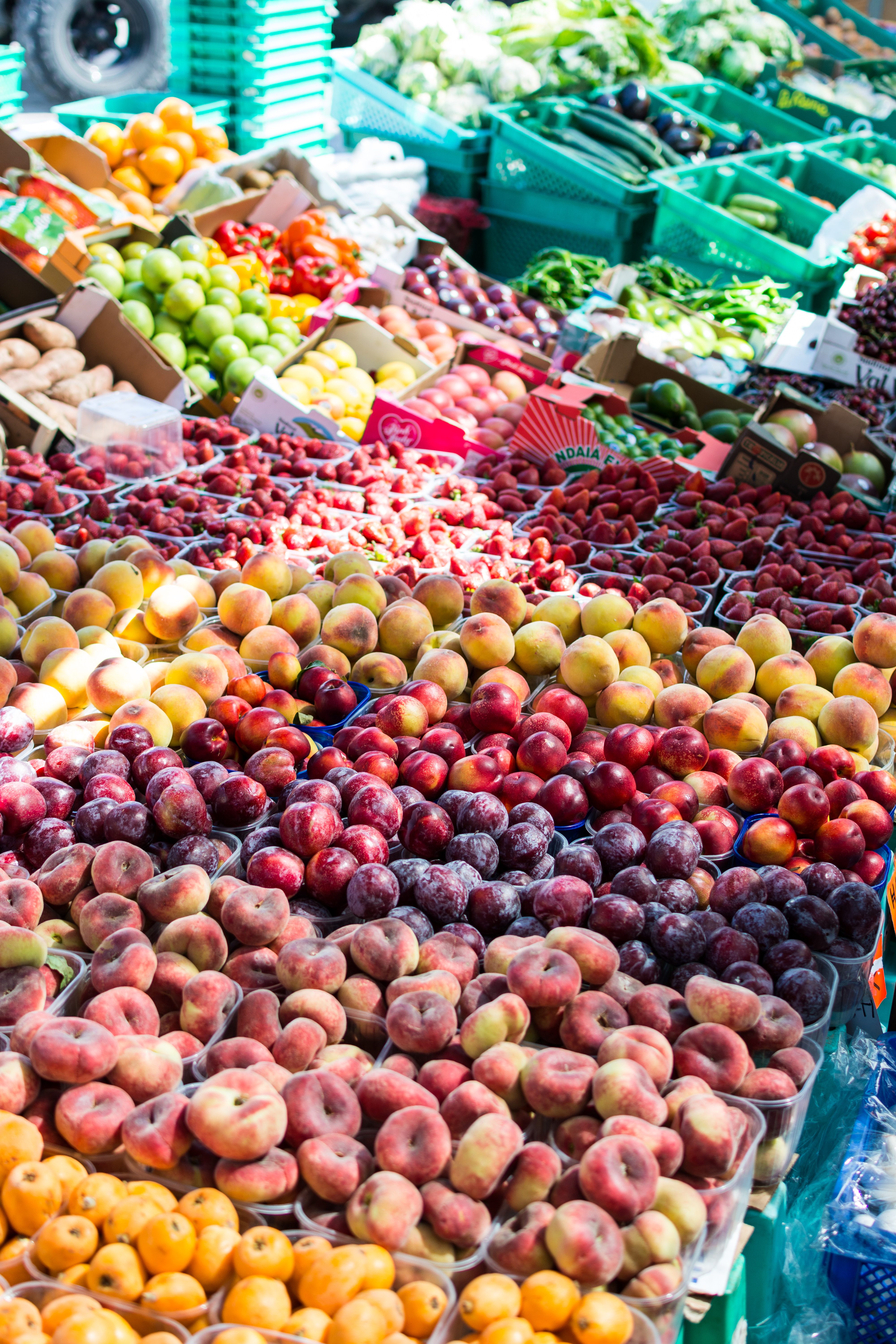
Fruits and vegetables are important in the Mediterranean diet as they provide vitamins, minerals, and phytonutrients (plant-based nutrients). Fruits and vegetables are also low in calories and rich in dietary fiber. Include a variety of colors (dark green, orange, yellow, red, purple) everyday to get the widest array of nutrients.
There is strong scientific evidence that a diet rich in fruits and vegetables is associated with a lower risk of cardiovascular disease. The largest and longest study to date was conducted by the Harvard School of Public Health where the health and dietary habits of nearly 110,000 men and women were followed for 14 years. When these findings were combined with other U.S. and Europe studies, they found individuals who consumed more than five servings of fruits and vegetables per day had a 20 percent lower risk of cardiovascular disease when compared to individuals who consumed less than three servings per day.
A serving of fruit is 1/2 cup. A serving of vegetables is 1/2 cup, except raw leafy greens, which is 1 cup. Based on these studies, it is recommended to consume at least five servings of fruits and vegetables. The higher your calorie intake is, the more fruits and vegetables you can consume. My calorie intake is roughly 2,100 calories, and I eat ten servings of fruits and vegetables.
To eat more fruit, try fresh fruit for dessert and as a topping on your morning cereal, oatmeal, or porridge. Try fruits salads and snack on apples or bananas. Also mix fresh fruit into salads. To eat more vegetables, try oven-roasted vegetable medleys, stir fries, soups, stews, and salads, Build meals around beans, an important vegetable. Also explore the produce aisle at the store and try something new, because variety is as important as quantity.
Written in response to the prompt: Home Turf.
 The Mediterranean Diet Unplugged
This has been one of my health goals for this year. 🙂
LikeLike